

Loading...
Space-Time Smackdown is the second major set of Pokémon TCG Pocket. Although Pocket is still relatively new, this set feels like an anomaly: it lasts only four weeks, despite being a major expansion. In comparison, the Genetic Apex format ran for six weeks (or eleven if we count Pokémon TCG Pocket's soft launch). Meanwhile, the expected smaller set, codenamed A2a, will be the main format for a record eight weeks.
This short duration wasn’t the only surprise. The set launched with only two booster packs, compared to Genetic Apex’s three. While this initially raised concerns about not being enough new cards to jostle the format, it quickly became a relief for the community as it made collecting cards less painful—especially with such a limited time frame. And despite having fewer packs, Space-Time Smackdown still managed to completely reshape the metagame.
New shiny dark toys
In the first week, players gravitated toward the most obvious new archetypes like Palkia ex, Dialga ex, and Weavile ex, as well as the established top decks like Pikachu ex, Mewtwo ex, and Gyarados ex. However, these decks quickly fell short against what turned out to be the format’s biggest newcomer: Darkrai ex.
Himokyu - Hooglandia & Spragels Open winner
With its ability to deal 20 damage to the Defending Pokémon every time a Energy is attached to it, Darkrai ex functions like a Greninja, able to strike from the Bench... but without the need to evolve. By stalling with Druddigon and/or Kangaskhan in the Active spot, the deck safely charges up Darkrai ex while also preparing the newcomer, Magnezone. Thanks to Genetic Apex Magneton’s Volt Charge ability, Magnezone can attack for 110 damage without requiring Energy, so the deck fully dedicates its Energy Zone to Energy to consistently triggering Nightmare Aura.
Pikachu ex was already weak into Druddigon, as nothing but a decently lucky Zapdos ex could one-shot it, and Space-Time Smackdown didn’t introduce anything that fit the deck’s strategy to solve this issue. Zebstrika going over Druddigon wasn’t enough either, as both Darkrai ex and Magnezone could take it down in a single hit. Every Pokémon falls into the knockout range of Magnezone + Nightmare Aura, and the deck’s usual “hit and run” strategy—enabled by its bulky Basic Pokémon ex—was entirely shut down by the new Cyrus Supporter, which forced the previously retreated Pokémon back into the Active spot to secure knockouts.

Mewtwo ex fared even worse. With Pokémon finally finding their stride through a powerful Basic Pokémon ex, Mewtwo’s long-standing dominance crumbled under its overwhelming Weakness. Unlike Mewtwo, which relied on Gardevoir for support, Darkrai ex could score knockouts without any external assistance. The release of the underwhelming Cresselia ex failed to offer a viable solution to this problem.
By the end of week 1, Darkrai ex’s dominance was indisputable. However, unlike the oppressive Pikachu-Mewtwo metagame, this new reign appeared more balanced, as top 8 finishes remained diverse. Established decks, such as Gyarados ex, still found success—most notably in Werr’s run to the finals of the first edition of Ursiiday’s Pocket Weekly under the new format.
Werr - Ursiiday's Pocket Weekly #14 winner
The following week focused on finding a credible answer to Darkrai ex. Early attempts centered around a Fighting Toolbox paired with Magnezone, utilizing Hitmonlee to weaken bulky targets before finishing them off with Magnezone, assisted by Cyrus to force knockouts. While very good into Darkrai ex, a more effective solution quickly emerged, taking full advantage of the new Trainer cards introduced in Space-Time Smackdown... and an all-time classic: Exeggutor ex.
Return of the Eggs
glione - FrogEX Weekly Cup #5 winner
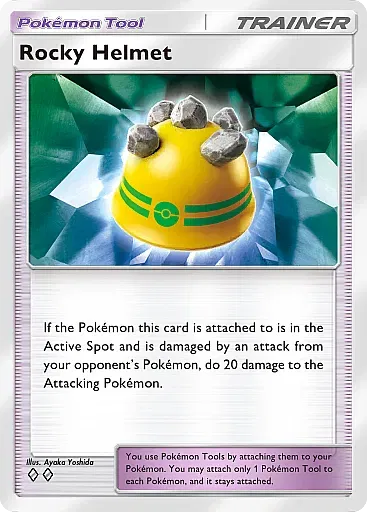
Not only does Exeggutor ex exploit Darkrai ex’s Weakness, but its bulk keeps it out of range of Darkrai ex’s ability and attack, as well as Magnezone’s Thunder Blast. While its damage output falls off in the late game, Rocky Helmet helps push it further, especially since barely anything outside of Charizard ex or Gyarados ex (after a Greninja’s Water Shuriken) can take it down in one hit. The rest have to chip away at it more than they’d like, taking extra damage from the Helmet, made even worse by the deck’s strong healing options in Erika, Potion, and sometimes even Shaymin.
Tropical Swing remained as threatening as ever, still taking down most Basic Pokémon on a Heads, including those from the Fighting Toolbox decks that were starting to gain traction.
The biggest downside of Exeggutor ex—its evolution requirement—was also softened by a new tool from Space-Time Smackdown: Pokémon Communication. By shuffling an unneeded Celebi ex or second Exeggcute, players could reliably fetch Exeggutor ex, keeping the deck running smoothly.
Any solution?
For the next two weeks, Exeggutor ex took over the format. The metagame started looking a lot like Genetic Apex, where Mewtwo ex and Pikachu ex dominated. Darkrai ex, often paired with Magnezone or Greninja, held strong against everything—except Exeggutor ex, which completely shut it down. With so many Exeggutor ex decks making deep runs, the format naturally pulled toward Charizard ex, the best counter to the palm tree.
Felipe R - Ursiiday's Pocket Weekly #16 winner
Charizard ex, even with Pokémon Communication and Dawn, was still less consistent than the other top decks. It could fall apart due to bad coin flips on Inferno Dance or failing to set up any of its evolution piece in time.
With other decks struggling to keep up at the same level, the metagame stayed in the hands of the two top decks, pushing the game in a more aggressive direction. This showed both in deck builds, with Kangaskhan gradually replacing Druddigon as the tank of choice in Darkzone, and in new archetypes, like Skarmory Magnezone, a faster, low-to-the-ground aggro deck entering the meta.
Yanstorm - The Dark League Tuesday #2 winner
This deck is very straightforward. The ideal start is Skarmory in the Active spot, attaching a Tool to enable a full-power Metal Arms by turn 2. Since this attack one-shots Exeggcute and two-shots Kangaskhan and Druddigon, Skarmory finds a solid niche in the current metagame. Meanwhile, the deck can quietly set up a Magnezone or Heatran on the Bench for higher damage output later in the game, all while trading for just one point.
Adjusting for the deck, Giant Cape was suddenly a more common occurrence in Exeggutor ex decks to ensure Exeggcute would survive this attack on the first turn.
Takeaways and wrap up
Space-Time Smackdown succeeded in shaking up a metagame that had been dominated by Mewtwo ex, Pikachu ex since Genetic Apex and reinforced further with Mythical Island. For the first time in TCG Pocket, competitive and archetypes became viable. Tools added more depth to the game by forcing tactical decisions before attacking, while Cyrus finally brought a solution to the previously dominant strategies of big Basic Pokémon ex by punishing hit-and-run tactics.
Sadly, the defining feature of this format ended up being its monotony. Despite its short four-week run, Space-Time Smackdown wore out its welcome quickly. The format simplified too fast, boiling down to Darkzone maintaining a well-rounded matchup chart while Exeggutor ex efficiently countered it and threatened one-hit knockouts against anything relying on evolutions or high damage output. This left little room for creativity as Pokémon became also much more efficient; the best incarnation is Magnezone, being able to attack for 110 damage without committing to playing a single Energy, making it an auto-include in any deck with a low Pokémon count and looking for a strong beater.
On top of that, the game's new trading system, released at about the same time and widely regarded as limited and impractical, made it hard for players to get the cards they needed to build competitive decks.
There aren’t many ways around the game design issue. Stage 2 evolution decks with energy commitments seem to naturally struggle against high-efficiency Basic Pokémon ex or those that attack quickly. But the balance is delicate—nobody wants Charizard ex to become too consistent either.
With rumors of a ranked mode coming to TCG Pocket soon, the developers might have better data tracking, allowing for potential card nerfs, something only possible in a digital TCG. Or maybe A2a will introduce enough diversity and solutions to keep the game fresh for two full months, until A3 shakes things up again.